
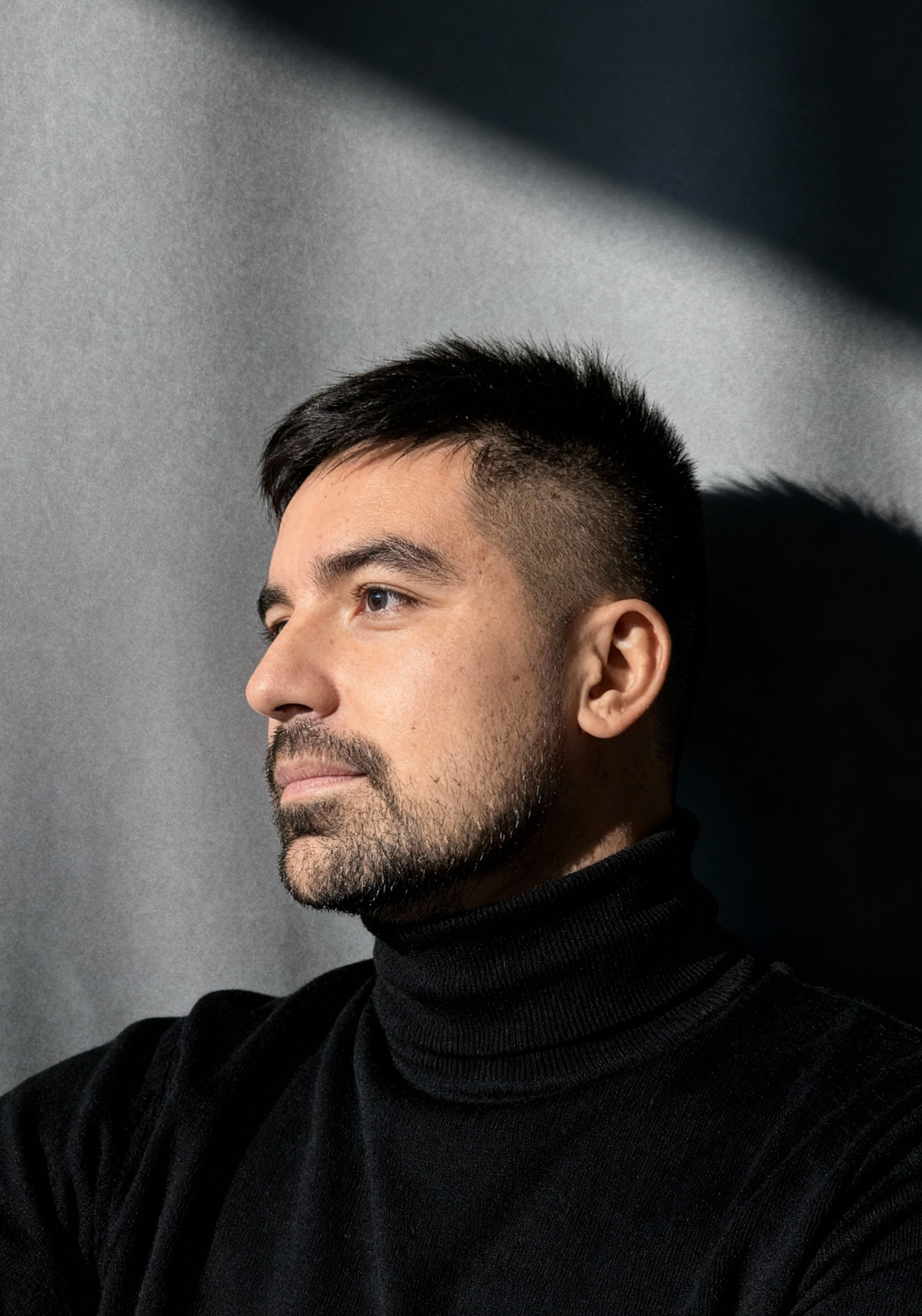
Face-swap localisation is the process of using AI to replace the visible faces in a finished commercial with new talent that better reflects a particular market, while keeping the rest of the production — performance timing, direction, lighting, edit — exactly as it was shot.[4] It lets a single hero film become several culturally specific variants without reshooting.[1][2]
Why brands use face-swap localisation
Global advertisers face a recurring trade-off. Run one piece of creative everywhere and lose local relevance, or commission a separate shoot per market and lose budget, time, and consistency.[1][2] Face-swap localisation sits in between: a brand keeps the creative idea, the script, and the production design across every market, and only changes the people on screen so the campaign reads as locally cast.[1][2]
The technique is most often used in markets where the lead talent's appearance materially changes how the audience reads the ad — categories like beauty, FMCG, health, family, and food.[3] It is also widely used to extend a campaign into markets that were not in the original shoot plan, where commissioning local production is not commercially viable.[1][2]
How face-swap localisation works
Modern face-swap pipelines work frame by frame.[4] The original footage is analysed to lock the original talent's head pose, expression, and lighting.[4] A new face — either a real, contracted actor or a fully licensed synthetic likeness — is then rendered into each frame with the same pose, expression, and lighting as the original.[4] The result is a clean integration that preserves the original performance and direction, with the new face inheriting the existing cinematography rather than being composited on top of it.[4]
At Myth Labs the work runs through our proprietary Agent Myth AdLocalise pipeline, which combines face-swap with voice cloning, lip-sync, and visual resynthesis of text and packaging.[4] A typical brief covers 3 to 12 markets and delivers all variants in under five working days.[1][2]
Face-swap, deepfakes, and consent
Face-swap is the same underlying technology as a deepfake; what differs is the consent and the contract.[4] In a properly run advertising project, every face on screen is either a contracted, paid actor whose agreement explicitly permits AI modification, or a fully licensed synthetic likeness with no real-person basis.[1][3] The ethical line sits at consent and disclosure, not at the technique.[4]
Brands working in regulated categories should also check that the original talent agreement permits AI modification before committing to face-swap.[3] If the talent contract pre-dates the technology, a written addendum is usually needed.[3] Our team walks clients through the typical contractual checks as part of a face-swap brief — see the ad localisation process for the full sequence.[1]
What changes, and what stays the same
The thing that most surprises clients new to face-swap is how little of the original production actually changes.[1][2] The lighting setup is the same.[1][2] The wardrobe is the same.[1][2] The blocking, the camera moves, the edit, the sound design, the grade — all the same.[1][2] The performance is the same too: the original actor's eye line, micro-expressions, head tilts, and timing are preserved.[4] What changes is the surface of the face, frame by frame, so that the visible identity reads as the new market's talent.[4] Done well, the only person who can spot a face-swap is the original actor.[1][2]
That has a knock-on effect on consistency.[1][2] A traditional multi-market production tends to drift across markets even when every shoot follows the same script: different DPs make different decisions, different locations cast different light, different edits land on different frames.[1][2] Face-swap localisation eliminates almost all of that drift, because every market shares the same underlying production.[1][2] The brand voice is identical across every variant.[1][2]
When face-swap is the right choice
Face-swap localisation is a strong fit when the creative idea travels well, the original master is high quality, and the goal is to deliver consistent global creative that still feels locally cast.[1][2] It is also useful in research, where brands want to test the same script in multiple markets with a controlled variable — only the talent changes — rather than confounding the test with different productions.[1][2]
It is a weaker fit when the creative concept itself needs to change per market, or when the original master has unstable lighting and tracking that would make any frame-by-frame replacement visible.[1][2] In those cases, a partial reshoot or a hybrid approach often produces a better result.[1][2]
Cost, turnaround, and how to brief it
A typical face-swap localisation brief delivers all market variants in under five working days from the point at which the master, the talent direction, and the regulatory copy are signed off.[1][2] The cost per market variant is a fraction of a reshoot in the same market — broadly £3,000 to £10,000 per market depending on scope, against £15,000 to £40,000 for a full per-market production.[1][2] The exact number depends on length, the number of in-vision faces, the amount of on-screen text and packaging that needs reworking, and the complexity of the QC pass.[1][2]
Briefing a face-swap project well comes down to four things: an approved master at broadcast quality, a clear demographic profile for each market's replacement talent, a confirmed talent agreement that permits AI modification, and the per-market regulatory copy.[1][3] The cleaner those inputs are, the faster the variants land and the less time is spent in QC reprocessing edge-case shots.[1][2]
For more on how face-swap fits into a wider AI localisation brief, see our long-form guide on the face-swap localisation process.[1][2]
Sources
- Cadbury Celebrations ‘Not Just A Cadbury Ad’ — Kyoorius Creative Awards, 2021
- This Diwali, Ogilvy and Cadbury Celebrations create ‘the world’s first ad that is not just an ad’ — Campaign India, 2020
- Cadbury Celebrations and Ogilvy launch ‘Not Just A Cadbury Ad 2.0’ featuring Shah Rukh Khan — The Drum, 2021
- A shape-aware identity cross-attention face swapping framework — PLOS ONE, 2024