
Cinematic AI video refers to AI-generated footage that adopts the visual language of film production, rather than resembling casual social content. It combines controlled camera movement, specific lens and focal length choices, motivated lighting and colour grading to create a cohesive, authored aesthetic.[1][2] Modern text-to-video systems can interpret prompts that describe shot type, lensing and mood, so creative teams can brief AI more like a cinematographer than a template editor.[3][4] This makes cinematic AI video relevant for advertisers exploring AI TVCs and long-form storytelling.
Definition and core characteristics
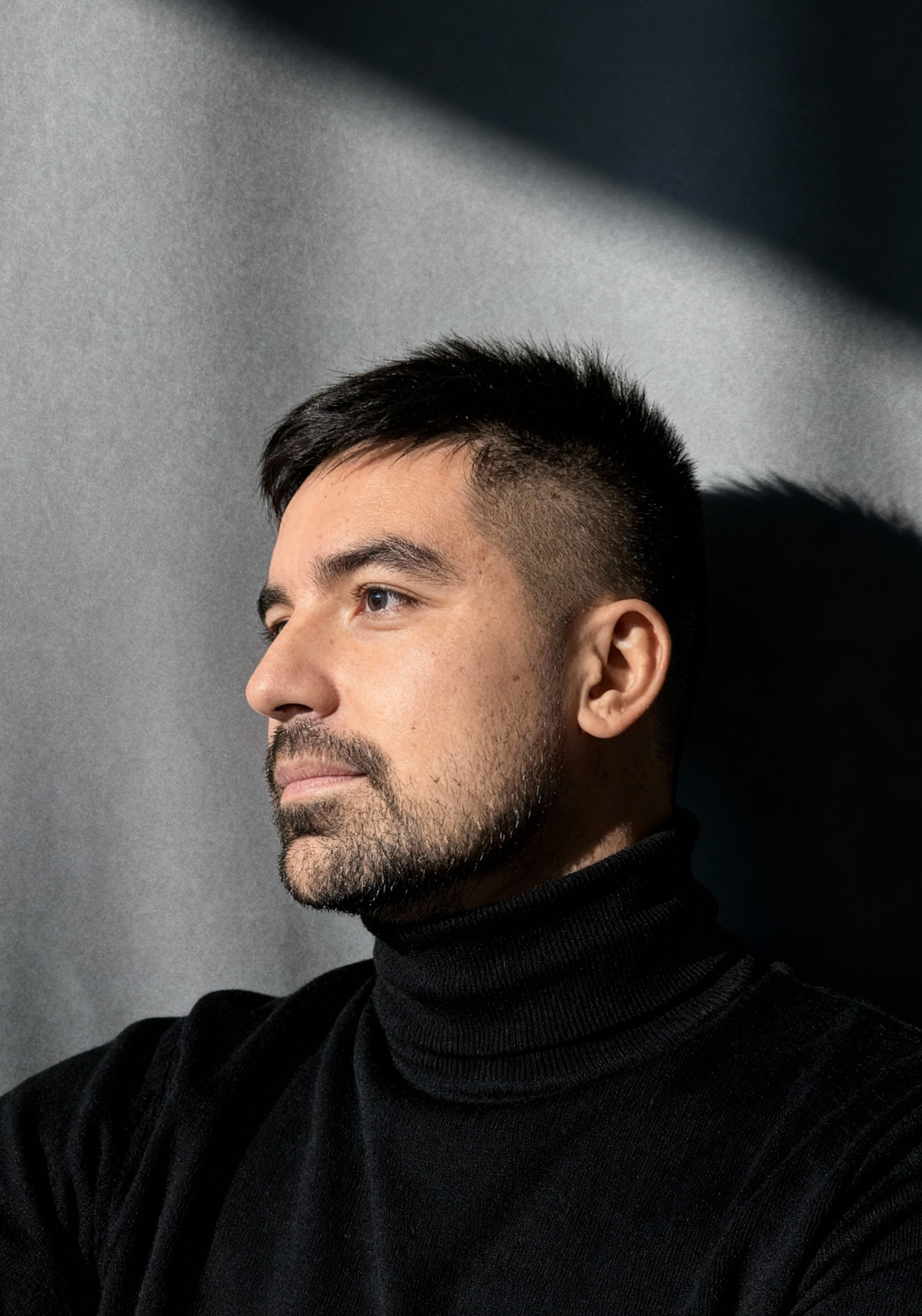
In practical terms, cinematic AI video is AI-generated motion footage that emulates professional cinematography: considered composition, selective focus, controlled motion and a consistent grade.[1][2] Compared with more generic AI clips, it tends to use wider aspect ratios, shallow depth of field, and camera moves that feel purposeful rather than random. Creative direction often references human film craft, for example the American Society of Cinematographers’ emphasis on visual storytelling through light, lens choice and blocking.[5] The result is material that reads as filmic and narrative-led, even when produced entirely from prompts.
Key visual cues include: shot scales that track character emotion, such as pushing from a wide establishing shot into a close-up; lighting that appears motivated by plausible sources in the scene; and motion that respects continuity of screen direction.[1][5] Colour is usually treated to support mood, with controlled contrast and palette rather than out-of-the-box saturation.[2] These choices help cinematic AI output sit more comfortably alongside live-action material, which is important when integrating into broadcast-ready edits or mixed-media campaigns.
Prompting for cinematic lenses, movement and framing
Cinematic control in AI video often starts at the prompt. Systems such as Runway’s Gen-3 Alpha allow users to specify shot type (for example, “wide establishing shot”, “medium tracking shot”), camera movement (“slow dolly in”, “handheld”, “locked-off tripod”), and lens characteristics (“shot on 35mm lens at T2 for shallow depth of field”).[1] Google DeepMind’s Veo similarly accepts prompts describing camera direction and visual tone to produce coherent cinematic sequences rather than isolated moments.[3]
Effective prompts usually combine narrative intent with technical cues, for example: “Night exterior, 50mm lens, soft backlight, slow push-in on protagonist, shallow depth of field, desaturated teal and orange grade”.[1][3] Including focal length, aperture or depth-of-field hints encourages models to separate subject and background. Referencing shot grammar, such as “over-the-shoulder conversation” or “low-angle hero shot”, helps maintain continuity across generated shots. For brands, this aligns AI direction more closely with established storyboards and cinematography briefs used in photoreal AI video and live-action work.
Model capabilities enabling cinematic control (2024–2025)
The step-change for cinematic AI video has been newer generative models that handle spatial and temporal coherence with greater fidelity. Runway’s Gen-3 Alpha, released in 2024, introduced more detailed control over camera movement and character consistency, with examples showing complex moves such as crane shots and tracking shots rendered with stable composition and motion blur.[1] Google DeepMind’s Veo demonstrated minute-long clips with consistent subjects, dynamic camera motion and filmic lighting, moving closer to traditional cinematography language.[3]
OpenAI’s multi-modal “Sora” model, announced in 2024, focused on physically plausible scenes where camera motion, object interactions and lighting behave in a consistent, film-like way.[4] Trade press coverage highlighted its ability to follow storyboard-style prompts, such as specifying a “cinematic tracking shot through a busy Tokyo street at golden hour”.[2] Together, these systems pushed AI video from short, impressionistic clips towards sequences where shot continuity, blocking and camera grammar can be directed in ways familiar to film and advertising production teams.
Post-production and grading for a filmic finish
Even when base footage is generated by AI, most cinematic workflows still rely on professional colour grading and finishing tools. DaVinci Resolve remains a common choice, as it offers detailed control over contrast, colour balance, skin tones and film emulation LUTs in a single pipeline.[6] AI-generated clips are typically conformed into a timeline, balanced for exposure and colour consistency, then graded to a show LUT or brand palette. This process helps mitigate variations between generations and gives the piece a coherent visual identity suitable for commercial use.
Additional post-production steps may include subtle grain, halation and gate weave to echo photochemical film, as well as sound design and mix to support the cinematic impression.[6] For advertisers, this grading and finishing stage is often where AI material is integrated alongside live-action, motion graphics or CG, ensuring everything meets technical delivery standards for TV, online video and out-of-home.[2] A considered post pipeline, not the model alone, is therefore central to achieving cinematic AI video that feels production-ready for brand campaigns. Brands commissioning work in this register typically engage a dedicated AI video production partner that owns grading and finishing as well as model selection, so the cinematic intent survives all the way to delivery.
Sources
- Gen-3 Alpha: A next step forward for controllable video generation — Runway, 2024
- Can OpenAI’s Sora Disrupt the Ad Industry? — Adweek, 2024
- Veo: A next generation video generation model — Google DeepMind, 2024
- Sora: Creating video from text — OpenAI, 2024
- American Cinematographer Manual, 11th Edition — American Society of Cinematographers, 2023
- DaVinci Resolve 18: Colour Grading Features — Blackmagic Design, 2024